Mark Sutton/Formula 1 via Getty Images
Will F1’s 2026 cars rise to the traditional challenges of Spa?
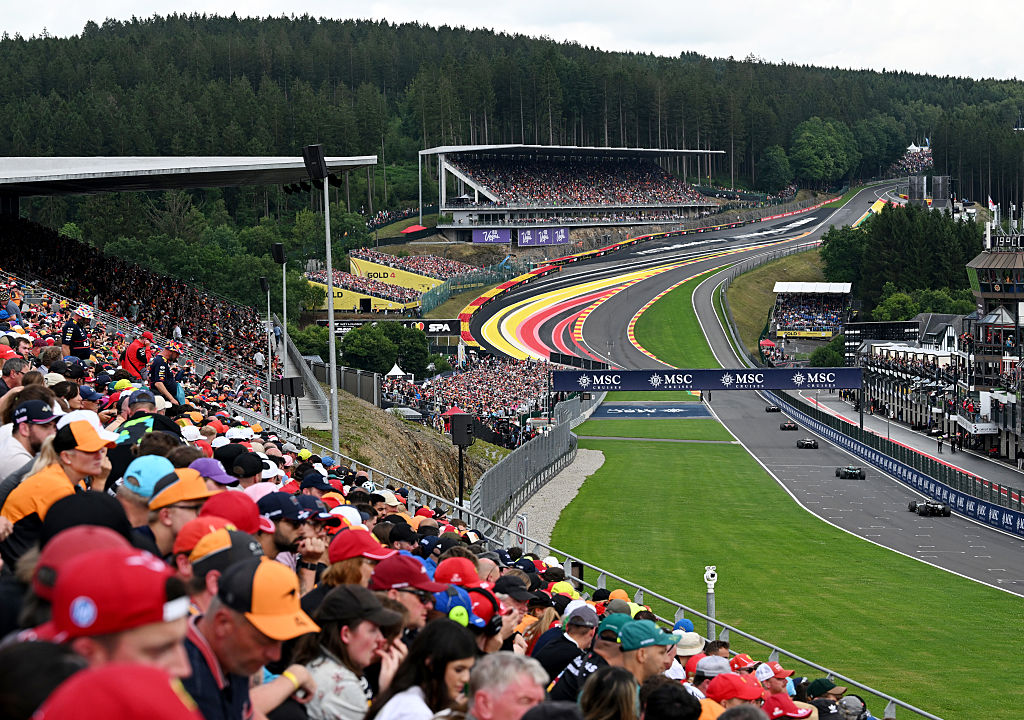
There are certain circuits that are easy to pick out as driver favorites, thanks to their high-speed, flowing nature. Suzuka always ranks highly in the personal rankings, as does Silverstone, but Spa-Francorchamps sometimes outshines them all.
It’s a subjective discussion, of course, but given Spa’s prominence as a circuit used for junior categories, it’s often a place where drivers have raced on multiple occasions. And it features not only the full range of corner speeds, but massive elevation changes, long straights, big braking zones, and unpredictable weather.
RELATED: Lapping Spa-Francorchamps, with Isack Hadjar
In 2026, however, it’s only the unpredictable weather that is, well, predictable, because the new regulations could have an impact on the sort of challenge Spa-Francorchamps provides to the drivers.
A huge amount of full-throttle time from La Source (Turn 1) to the braking zone for Les Combes (Turn 5) means a significant power demand, and a second one follows in the final sector. With drivers needing to regenerate energy, it could have an impact on where they are not pushing the cars to the limits of grip.
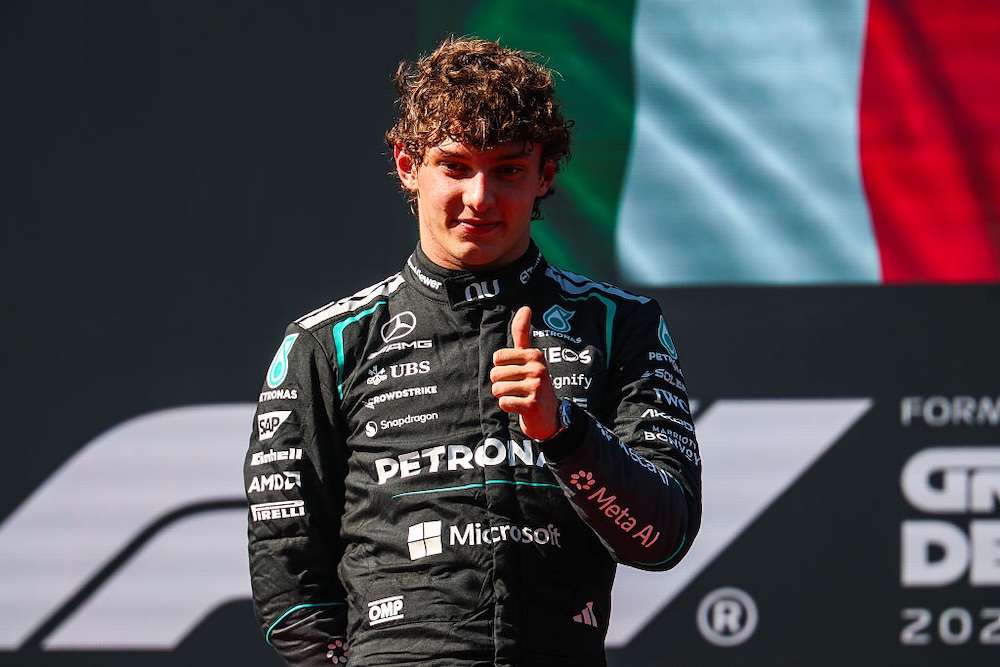
“Coming from Austria where you have good amount of energy – because you have a lot of braking zones – then you come to Silverstone where it's a challenge, I think now it's an even bigger step in that direction because I think this will be the most difficult of the year in terms of energy management and feeling for the drivers, because you just don't have enough, essentially,” Oliver Bearman explains. “So, that will be interesting. It's tough because next week we're going to go to Budapest and with the amount of braking zones you have there, you can pretty much run at full power, which is going to be amazing. But this weekend is going to be really tough.
“And it was similar with Austria and Silverstone, like I said, so it's tough. We're having to adapt to new things and with the sensitivity of energy here, it's so important to be as efficient as possible. At the end, it's taken care of by strategy, but I think that straight's going to be quite long compared to last year. But that's how it is.
“I think this is the worst track for it and it's going to improve as years go on, as we're making these small tweaks on the regs. But there's always going to be tracks like this one, like Silverstone, where you are reminded that we simply don't have enough energy.”
A lack of energy means there will be super-clipping at times, with F1’s simulations suggesting up to two seconds across the entire lap. Bearman says the additional impact on certain corners actually makes the less power-sensitive venues more attractive to him now.
“The car [in Budapest] is a bit more how we've had it in the past, how we've had it in our whole careers, whereas here it's very, very different," said the Haas driver. “I think from a driver's perspective, if you asked me last year, ‘Where would you prefer to race?’ it would be here. This year I would tell you probably Hungary and Austria, as opposed to Silverstone and Spa, which sounds crazy, but that's what it is.
“It's interesting because also the way you approach some corners changes, because some corners you have twice as much power as others. So some corners you really need to focus on getting a great exit, other corners it doesn't matter as much because you have a very short exit with only 500 horsepower instead of 1,000, let's say.
“So it's interesting and it's definitely teaching us a lot. As much as we like to complain, it's making us better drivers.”
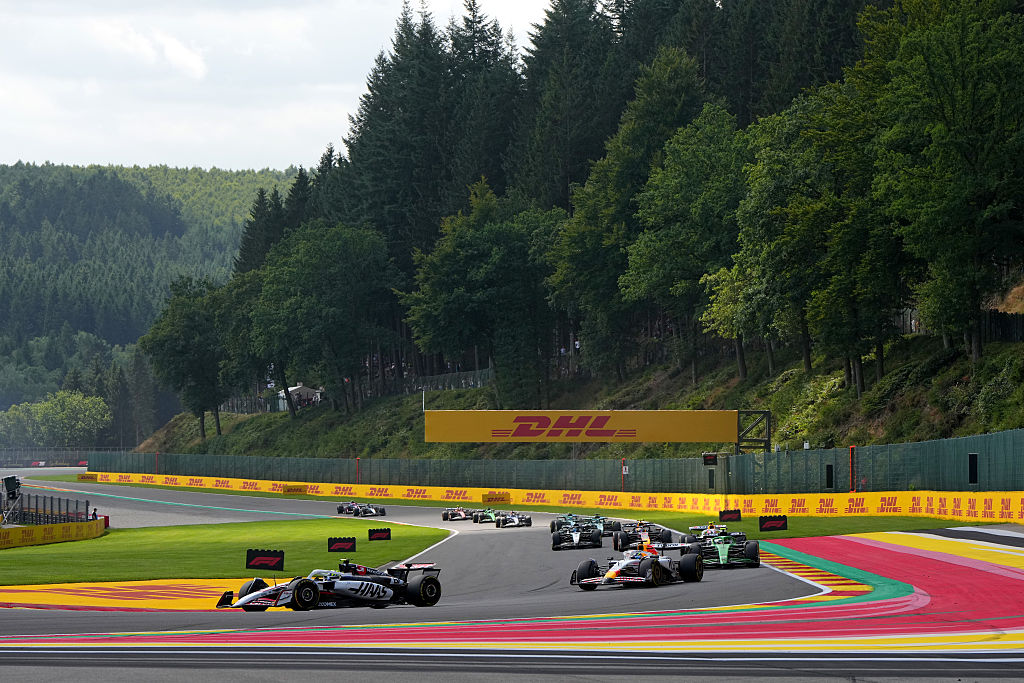
For Bearman, the nature of the current cars flips the script of what makes a track fun to drive, although he expects to find plenty to keep the experience of Spa interesting. Alex Bierens de Haan/Getty Images
Even though he says he still finds the competitive aspect of a race enjoyable, Fernando Alonso doesn’t go as far as agreeing with Bearman’s sentiments on the new cars improving him as a driver. The Spaniard even reveal he drives old cars for greater enjoyment.
“I didn’t drive the simulator this time, so it’s difficult to guess [how it will change],” Alonso said. “Sector 2 will be different to last year as you are charging for the back straight, but also Turn 17 [Blanchimont] and Eau Rouge will be different, but let’s see. It depends on many things – it’s not only the speed of the battery available, it’s the combustion engine available that you have, the speed you get in Sector 2…
“Sure, [Pouhon won’t be as big a challenge] – that’s the new Formula 1, it’s the same for the whole year. I don’t want to be negative. I have some old cars, aside from all the cars I have in my museum I have old cars – 2007 and 2012 – my own Formula 1 cars that I drive from time to time, and I do enjoy a lot.”
Despite Bearman and Alonso’s points, Lewis Hamilton caveats any loss of the challenge of the Spa layout over one lap with the fact it’s a venue where you can still expect to see plenty of battling for positions on track.
“It’s the opposite for me – these are the tracks that I look forward to even if we have [power limitations],” Hamilton said.. “At the moment, we should be struggling for power and be slow into Turn 5 and Turn 18.
“Monaco, stunning place, beautiful country, amazing track for a qualifying lap no matter what car you drive. But the least enjoyable race because you can't overtake.
“Just me personally, my excitement is not qualifying, it's racing. It's battling with people and wheel-to-wheel racing. Having to try to outdo and outsmart the drivers you're racing with. Apply pressure, defending, all that kind of stuff. That's what racing is, that's what I look for. So when you go to races and you can't do that, it's not the most satisfying.”
As Silverstone showed, pre-event predictions can be followed by a pleasant surprise. And the racing is likely to still be exciting on a track that is conducive to overtaking moves and unpredictability. But for those behind the wheel, the enjoyment through practice and qualifying might take a bit of a hit for this year at least.

Chris Medland
While studying Sports Journalism at the University of Central Lancashire, Chris managed to talk his way into working at the British Grand Prix in 2008 and was retained for three years before joining ESPN F1 as Assistant Editor. After three further years at ESPN, a spell as F1 Editor at Crash Media Group was followed by the major task of launching F1i.com’s English-language website and running it as Editor. Present at every race since the start of 2014, he has continued building his freelance portfolio, working with international titles. As well as writing for RACER, his broadcast work includes television appearances on F1 TV and as a presenter and reporter on North America's live radio coverage on SiriusXM.
Read Chris Medland's articles
Latest News


Comments
Comments are disabled until you accept Social Networking Cookies. Update cookie preferences
If the dialog doesn't appear, ad-blockers are often the cause; try disabling yours or see our Social Features Support.